
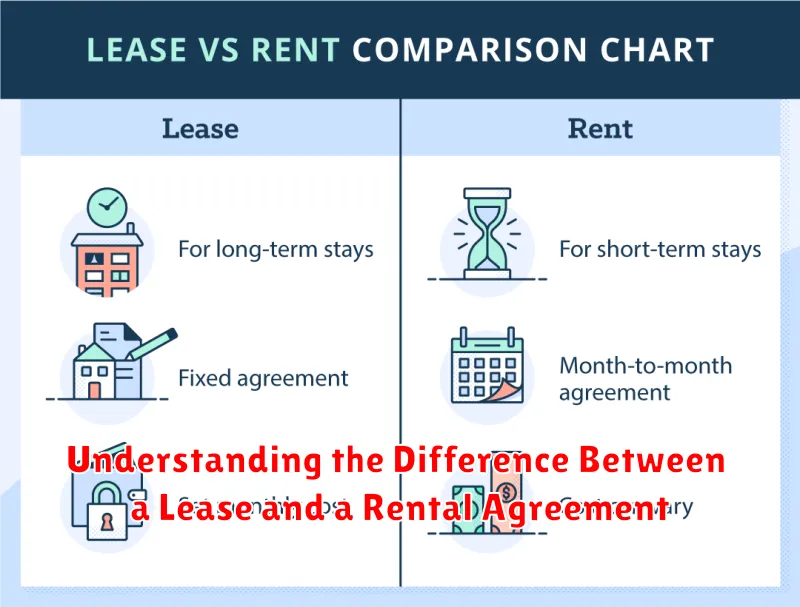
Are you preparing to move into a new home or apartment? Understanding the legal distinctions between a lease and a rental agreement is crucial for both landlords and tenants. This knowledge empowers you to make informed decisions and protect your rights. Navigating the world of leases and rentals can be confusing, but this article will provide a clear explanation of the key differences between a lease agreement and a month-to-month rental agreement. We will cover the definitions, terms, and obligations associated with each type of housing contract, ensuring you have the information necessary to choose the best arrangement for your situation. Learn the essential distinctions between a lease and a rental agreement to embark on your next housing journey with confidence.
Entering into a lease or rental agreement marks a significant commitment. Whether you are a landlord or a tenant, understanding the nature of these agreements is paramount. This article will delve into the specifics of both leases and rental agreements, outlining the duration, termination clauses, and responsibilities of each party involved. By understanding the nuances of a fixed-term lease versus a periodic tenancy, you can ensure a smooth and legally sound tenant-landlord relationship. We will explore the key factors to consider when choosing between a lease and a rental agreement, equipping you with the knowledge to make the best decision for your housing needs.
What Is a Lease?
A lease is a legally binding contract between a landlord (lessor) and a tenant (lessee) for the use of a property for a specific period. This period is typically a fixed term, such as six months or a year. The lease outlines the terms and conditions of the tenancy, including the amount of rent, payment due dates, and responsibilities of both parties.
A key characteristic of a lease is its fixed nature. Once signed, the terms are generally not easily changed and remain in effect for the entire lease duration. This provides both the landlord and tenant with stability and predictability.
What Is a Rental Agreement?
A rental agreement, often referred to as a month-to-month tenancy, is a short-term contract between a landlord and a tenant. It outlines the terms of the rental, such as the monthly rent amount, payment due date, and responsibilities of both parties.
A key characteristic of a rental agreement is its flexible nature. It typically renews automatically each month, unless terminated by either party with proper notice as defined within the agreement itself. This provides both the landlord and the tenant with greater flexibility than a lease.
Duration and Flexibility Differences
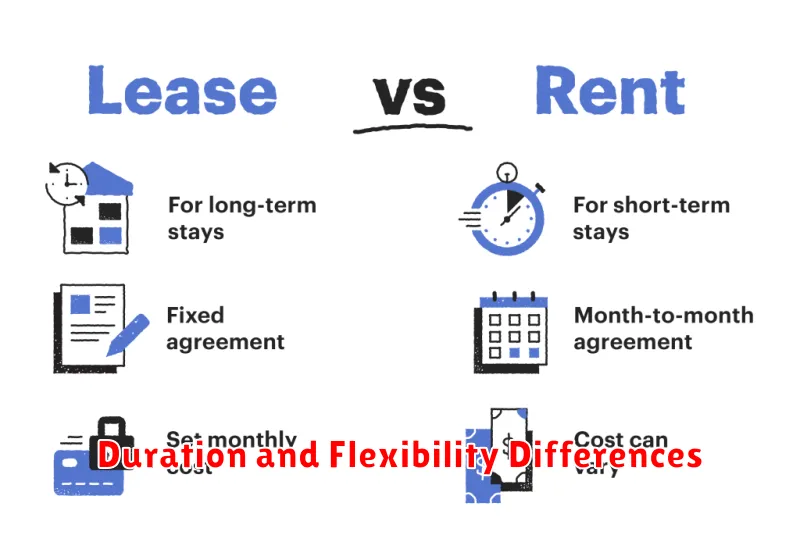
A key distinction between leases and rental agreements lies in their duration and flexibility. Leases are fixed-term contracts, typically lasting for a year, while rental agreements are generally month-to-month and offer more flexibility.
Breaking a lease often involves penalties, whereas terminating a rental agreement typically requires providing a predetermined notice period as stipulated in the agreement.
Legal Obligations for Each
Both lease and rental agreements establish legally binding obligations for landlords and tenants. A lease dictates terms for a specific period, often a year, while a rental agreement typically renews monthly.
Landlords must provide a habitable dwelling and adhere to agreed-upon maintenance. Tenants are obligated to pay rent on time and maintain the property’s condition as outlined in the agreement.
Breaching the agreement, whether by landlord or tenant, can have legal consequences, including potential eviction or lawsuits.
Renewal and Termination Terms
Lease agreements typically have a fixed term, often one year, and automatically renew unless either party provides notice of termination within a specified timeframe. Termination clauses outline specific conditions under which the lease can be broken early, often involving penalties.
Rental agreements, being month-to-month, offer more flexibility. Either party can terminate the agreement with proper notice, usually 30 days, without significant penalty. Renewal is automatic each month until notice is given.
Which Is Right for Your Situation?
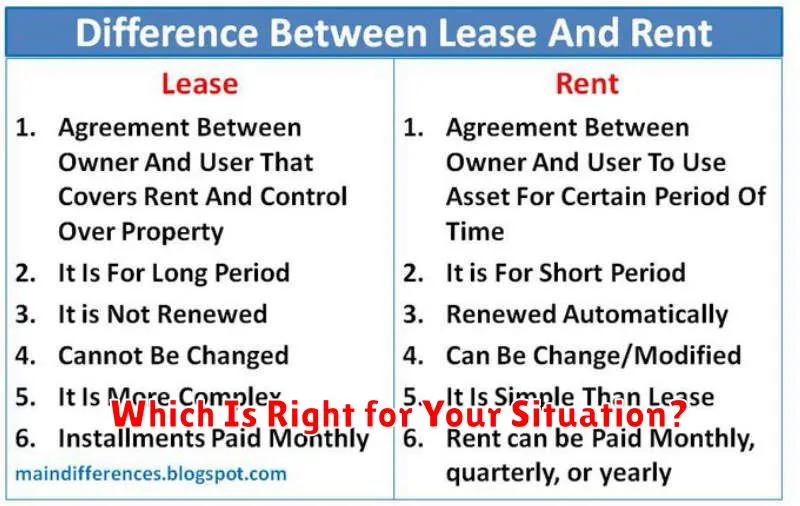
Choosing between a lease and a rental agreement depends on your individual circumstances. Lease agreements offer more stability, typically lasting for a fixed period, such as a year. This provides both landlord and tenant with predictable terms. If you value long-term security and consistent payments, a lease is often the better choice.
Rental agreements, often month-to-month, provide greater flexibility. This can be beneficial if your housing needs are uncertain or short-term. However, rent amounts can fluctuate more easily, and either party can terminate the agreement with shorter notice than a lease typically allows. Consider your need for flexibility versus stability when making your decision.
Common Misconceptions Explained
A common misconception is that leases and rental agreements are the same. While both grant occupancy, they differ significantly. Lease agreements are typically for fixed, longer terms (often a year), while rental agreements are usually month-to-month and offer more flexibility.
Another misunderstanding involves termination. Breaking a lease can result in penalties, while a rental agreement can be terminated with proper notice as outlined in the agreement.
