
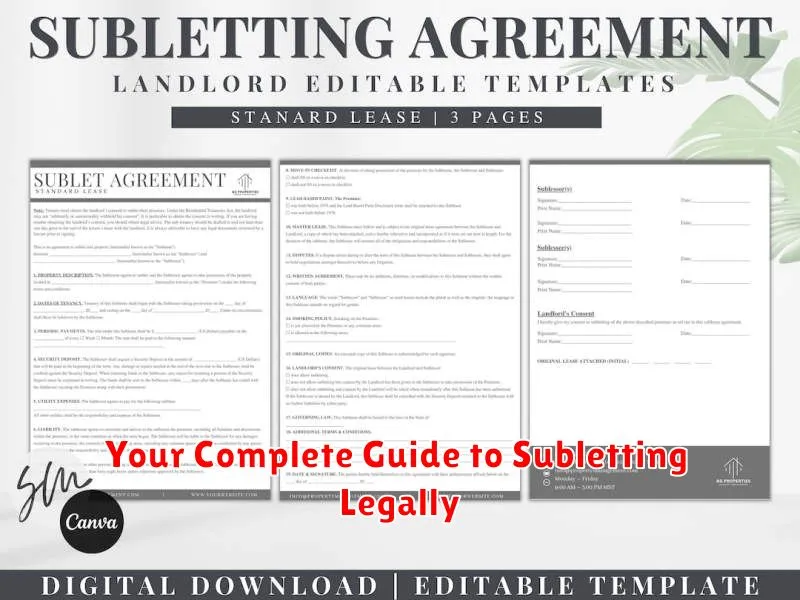
Subletting, also known as subleasing, can be a great option for both tenants and landlords under the right circumstances. Whether you’re a tenant looking to recoup some rent while you’re away or a landlord exploring options for maximizing property income, understanding the legalities surrounding subleasing is crucial. This comprehensive guide will provide you with everything you need to know about subletting legally, including understanding your lease agreement, navigating the subletting process, and avoiding potential legal pitfalls. We’ll cover key topics such as obtaining landlord consent, drafting a sublease agreement, and understanding your responsibilities as a sublandlord or a subtenant. Successfully navigating the subleasing landscape requires careful consideration of local laws and regulations, which we will also address.
From understanding the difference between subletting and assignment to learning how to handle security deposits and rent collection, this guide will equip you with the knowledge you need to sublet legally and confidently. We’ll explore the legal implications of subleasing, outline the steps involved in finding a suitable subtenant, and provide practical advice for managing the subleasing relationship effectively. Whether you are a tenant considering subletting your apartment, a landlord seeking to understand your rights and obligations, or simply curious about the legalities of subletting, this guide is your definitive resource. We will address common subletting challenges, offer solutions for potential disputes, and provide you with the tools to ensure a smooth and legally compliant subletting experience.
What Is Subletting?
Subletting is the act of renting out a property that you are currently leasing from a landlord to another person, called a subtenant. You, as the original tenant, become the sublandlord. It’s crucial to remember that subletting doesn’t release you from your original lease agreement. You remain responsible for rent payments and any damages caused by the subtenant.
Subletting usually requires the landlord’s permission, as stipulated in most lease agreements. Without consent, subletting can lead to legal repercussions, including eviction. Subletting agreements vary in length, but they cannot exceed the term of your original lease.
When Subletting Is a Good Option
Subletting can be a beneficial solution in various situations. If you’re facing a temporary relocation due to work, an internship, or family matters, subletting allows you to maintain your lease while offsetting the cost of rent. It can also be advantageous for students during summer breaks or individuals traveling abroad for an extended period.
Subletting can also be a viable option if you’re experiencing financial hardship and need to reduce your living expenses. By subletting a portion of your apartment, you can share the rent burden and ease your financial strain. It’s crucial to remember that proper communication and adherence to your lease agreement are essential when considering subletting.
Legal Requirements and Landlord Consent
Subletting often requires navigating specific legal requirements, most importantly obtaining landlord consent. Your lease agreement is the governing document, and it likely outlines the procedures for subletting. Some leases explicitly prohibit subletting, while others require written permission from the landlord.
Failing to secure necessary consent can lead to serious consequences, including lease termination and legal action. Before proceeding with subletting, thoroughly review your lease and communicate with your landlord in writing to obtain the required approvals.
Finding the Right Subtenant
Finding a responsible subtenant is crucial for a smooth subletting experience. Thoroughly screen potential candidates. This includes checking references, verifying employment and income, and conducting background checks if permissible by law.
Create a clear sublease agreement that outlines all terms and conditions, including rent amount, payment due dates, and responsibilities for utilities and maintenance. Clearly communicate expectations regarding guests, noise levels, and property care.
Trust your instincts. If something feels off about a potential subtenant, it’s best to continue your search. A reliable subtenant will respect your property and adhere to the terms of the sublease agreement.
Protecting Yourself Legally
Subletting can expose you to legal risks if not handled correctly. Thorough documentation is crucial for protection. Create a comprehensive written sublease agreement that clearly outlines all terms and conditions, including rent amount, payment schedule, and responsibilities for utilities and repairs.
Ensure the sublease agreement complies with your original lease and local laws. Obtain written consent from your landlord before subletting. This protects you from potential breach of contract issues and possible eviction.
Collecting a security deposit from the subtenant can provide financial protection against damages or unpaid rent. Clearly document the condition of the property before and after the sublease period with photos and/or videos.
Subletting Platforms and Tools
Various platforms and tools can assist in the subletting process. Online marketplaces specifically designed for sublets provide a convenient way to list and find subtenants. These platforms often offer features such as secure messaging, payment processing, and background checks. Utilizing these platforms can streamline the process and offer additional security for both sublessors and subtenants.
Beyond dedicated subletting platforms, general rental listing websites can also be used to advertise subleases, expanding your reach to a larger pool of potential subtenants. Digital lease agreement templates are another valuable tool, helping ensure legally sound agreements are in place. These tools simplify the subletting process, making it more efficient and manageable.
Ending the Sublease Smoothly
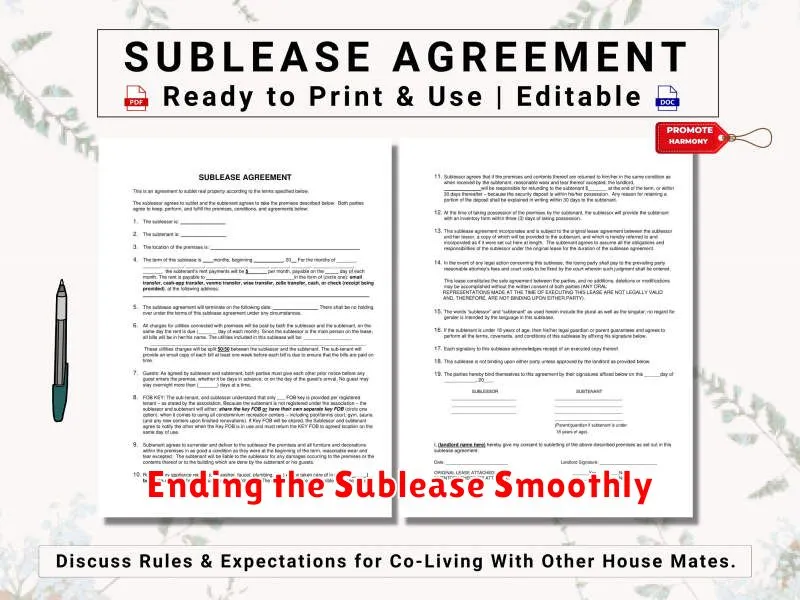
A smooth sublease end benefits both subtenant and sublessor. Follow the sublease agreement closely regarding the move-out date and procedures.
Conduct a thorough inspection with the subtenant present, documenting the condition of the property. This helps avoid disputes over security deposit returns. Return the security deposit according to the terms of the sublease agreement, after accounting for any necessary deductions.
Confirm the subtenant has returned all keys and fulfilled all obligations outlined in the agreement. Properly documenting the end of the sublease helps prevent future complications.
