
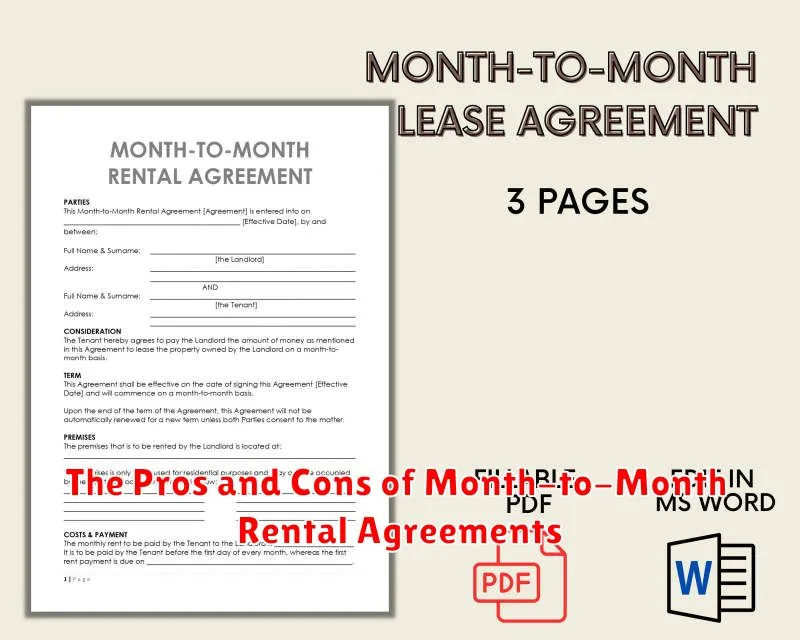
Considering a month-to-month rental agreement? Understanding the nuances of this type of lease is crucial before you sign. Month-to-month leases offer both advantages and disadvantages for renters and landlords alike. This article will explore the pros and cons of month-to-month rental agreements, providing a comprehensive overview to help you make an informed decision. Weighing the benefits and drawbacks of short-term leases is essential for navigating the complexities of the rental market. From flexibility and cost considerations to renewal clauses and notice periods, we will delve into the key aspects of month-to-month rentals.
Whether you prioritize the freedom to relocate quickly or the stability of a long-term lease, understanding the implications of each option is paramount. This analysis of month-to-month agreements will cover topics such as rent increases, lease termination, and the overall impact on both tenants and landlords. By exploring the advantages and disadvantages inherent in these short-term lease arrangements, you can determine whether a month-to-month rental agreement aligns with your individual circumstances and housing needs.
What Is a Month-to-Month Lease?
A month-to-month lease, also known as a tenancy at will, is a short-term rental agreement that renews each month. Unlike a fixed-term lease (e.g., one year), it doesn’t have a predetermined end date.
This type of agreement provides flexibility for both the landlord and tenant, allowing either party to terminate the tenancy with proper notice, typically 30 days.
Flexibility vs Stability
Month-to-month agreements offer significant flexibility. Tenants can easily relocate with relatively short notice, making these agreements ideal for individuals with uncertain futures. This contrasts sharply with the stability of longer-term leases.
While a year-long lease provides housing security and predictable rent costs, it limits mobility. Breaking a lease often incurs penalties. Choosing between flexibility and stability depends on individual circumstances and priorities.
How Rent and Rules Can Change
A key difference between month-to-month tenancies and longer-term leases lies in the flexibility for change. With a month-to-month agreement, the landlord has the right to increase rent or alter other terms of the agreement with proper notice, typically 30 days. This means your housing costs and rules could change monthly. While this offers landlords flexibility, it also introduces an element of uncertainty for tenants. Conversely, longer leases offer rent stability and consistent terms for the duration of the agreement, generally a year.
Notice Periods for Ending the Lease
A key aspect of month-to-month leases is the notice period required to terminate the agreement. Typically, this period is 30 days, but it can vary depending on local laws and specific lease terms. It’s crucial to understand this timeframe to avoid penalties. Both the landlord and tenant must adhere to the stipulated notice period.
Failing to provide adequate notice can result in financial repercussions, such as forfeiting part or all of the security deposit, or being responsible for another month’s rent. Always review your lease agreement carefully for the specific notice requirements and adhere to them closely.
Ideal Scenarios for Month-to-Month Living
Month-to-month agreements offer flexibility, making them suitable for specific circumstances.
Short-term job assignments or temporary relocation are prime examples. If you’re unsure about the duration of your stay, a month-to-month lease avoids the constraints of a longer commitment.
Individuals in career transition or actively searching for a home to purchase also benefit. This arrangement allows for open-ended housing while maintaining control over living arrangements.
Risks for Both Tenants and Landlords
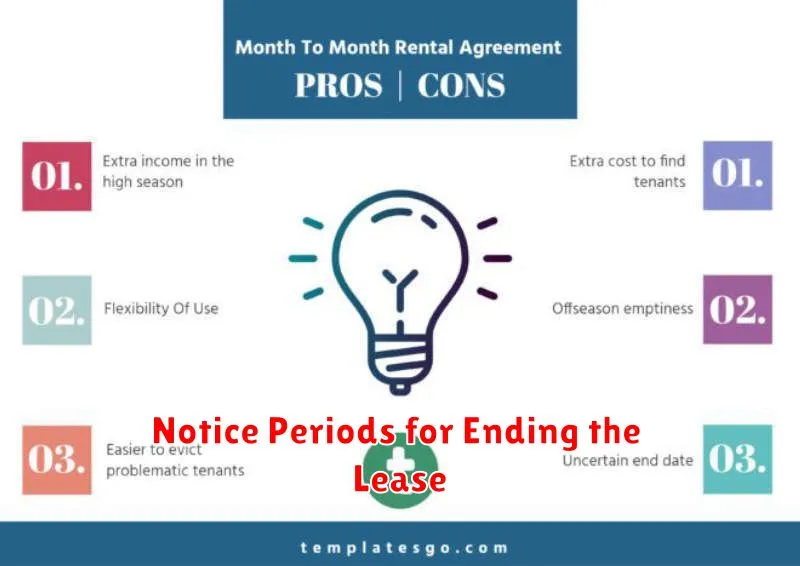
Month-to-month agreements offer flexibility, but also present distinct risks. Tenants face the risk of short notice termination, potentially disrupting housing stability. Rent increases are also possible with minimal notice, creating budgetary uncertainty.
Landlords risk higher vacancy rates due to the ease with which tenants can leave. Finding reliable, long-term tenants becomes more challenging. Additionally, the frequent turnover can lead to increased marketing and cleaning expenses.
When to Choose This Option

Month-to-month leases offer significant flexibility, making them ideal for individuals experiencing transitional periods. This includes those relocating for work or personal reasons, or individuals unsure of their long-term plans.
A short-term lease can also be beneficial for those testing a new neighborhood or city before committing to a longer-term arrangement. It allows renters to experience the area’s amenities, commute, and overall lifestyle without a long-term obligation.
Finally, this type of agreement may be suitable for those anticipating a significant life change in the near future, such as a new job, marriage, or starting a family, where a year-long lease might prove inconvenient.
