

Renting a home with bad credit can feel like an uphill battle. Many landlords view a low credit score as a red flag, potentially indicating financial instability and a higher risk of missed rent payments. However, securing a rental with less-than-perfect credit is absolutely achievable. This article provides a comprehensive guide on how to rent a home when you have bad credit, outlining proven strategies to overcome credit challenges and present yourself as a reliable tenant. We’ll explore topics like understanding your credit report, improving your credit score, finding landlords who are more lenient, and building a strong application. By understanding the nuances of the rental market and taking proactive steps, you can increase your chances of securing the home you desire, even with a challenging credit history.
Securing a rental property shouldn’t be a source of anxiety. While bad credit can present obstacles, it does not define your ability to be a responsible tenant. This article equips you with the knowledge and resources necessary to navigate the rental process successfully, offering practical advice on how to address your credit concerns directly with potential landlords. We’ll discuss options like offering a larger security deposit, providing references from previous landlords, and demonstrating a stable income. By understanding your rights and proactively addressing your credit situation, you can find a suitable rental and build a positive landlord-tenant relationship. This guide offers actionable steps to help you overcome the challenges of renting with poor credit and find your perfect home.
Understanding the Impact of Credit Scores
Your credit score plays a crucial role in the rental application process. Landlords use it to assess your financial responsibility and predict your likelihood of paying rent on time.
A low credit score can signal a higher risk to landlords. This can lead to several challenges, including application denials, requirements for a co-signer, or higher security deposits.
Understanding how your credit score is viewed by landlords is the first step toward overcoming these hurdles and securing the rental home you desire.
Landlords’ Concerns About Low Credit
Landlords use credit scores to assess the risk of renting to a prospective tenant. A low credit score can signal a higher risk of late or missed rent payments.
Late or missed payments disrupt a landlord’s income stream, making it difficult to cover property expenses. Eviction, a costly and time-consuming process, is a last resort when tenants consistently fail to pay.
Ultimately, landlords aim to protect their investment and ensure consistent rental income. A low credit score may indicate to a landlord that a tenant is a higher risk of financial instability.
Offering a Higher Deposit
One of the most effective ways to offset a less-than-ideal credit history is by offering a larger security deposit. This demonstrates financial responsibility and reduces the landlord’s risk.
A higher deposit can provide the landlord with a greater sense of security, assuring them that you’re committed to the lease and less likely to default. It might also make your application more competitive against other potential renters.
Be prepared to offer one-and-a-half to two times the typical security deposit amount. Discuss this with the landlord upfront and clearly outline the proposed increased deposit in your rental application.
Using a Co-Signer or Guarantor

If your credit history is preventing you from securing a rental, a co-signer or guarantor can strengthen your application. A co-signer assumes joint responsibility for the lease, meaning they are equally obligated to pay rent and adhere to the terms. A guarantor, similarly, agrees to pay if you default, but they aren’t directly listed on the lease.
Having a co-signer or guarantor with strong credit and stable income demonstrates to the landlord that the rent will be paid, even if your own credit is less than perfect. Be sure to discuss the responsibilities thoroughly with your potential co-signer or guarantor before proceeding.
Writing a Letter of Explanation
A well-crafted letter of explanation can significantly improve your chances of securing a rental with less-than-perfect credit. This letter allows you to address any negative items on your credit report directly. Be honest and concise. Briefly explain the circumstances that led to the negative marks, highlighting any steps you’ve taken to improve your financial standing, such as debt repayment or consistent on-time payments.
Focus on demonstrating your current ability to pay rent reliably. Mentioning stable income, employment history, and references can strengthen your case. Keep the tone professional and avoid making excuses.
Showing Income and Job Stability
One of the most important factors in renting with bad credit is demonstrating a steady income and stable employment. Landlords need assurance you can afford the rent. Provide pay stubs, bank statements, or a letter from your employer verifying your income and employment history. The longer your consistent employment history, the better.
If your credit is particularly poor, offering to pay a larger security deposit or several months’ rent upfront can reassure a landlord and increase your chances of approval.
Alternative Options Like Private Rentals
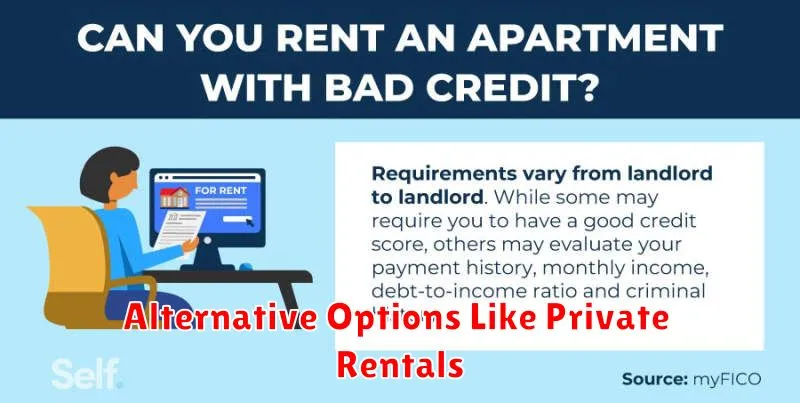
If traditional rentals prove challenging due to credit history, exploring private rentals can be a viable alternative. These rentals are typically managed by individual owners, rather than large management companies. Directly engaging with landlords increases the opportunity to personally explain your situation.
Building a strong case with references, proof of stable income, and offering a larger security deposit may persuade landlords to overlook credit imperfections. While navigating the private rental market may require more effort, the potential for flexibility and personalized agreements can make it a worthwhile pursuit.
