
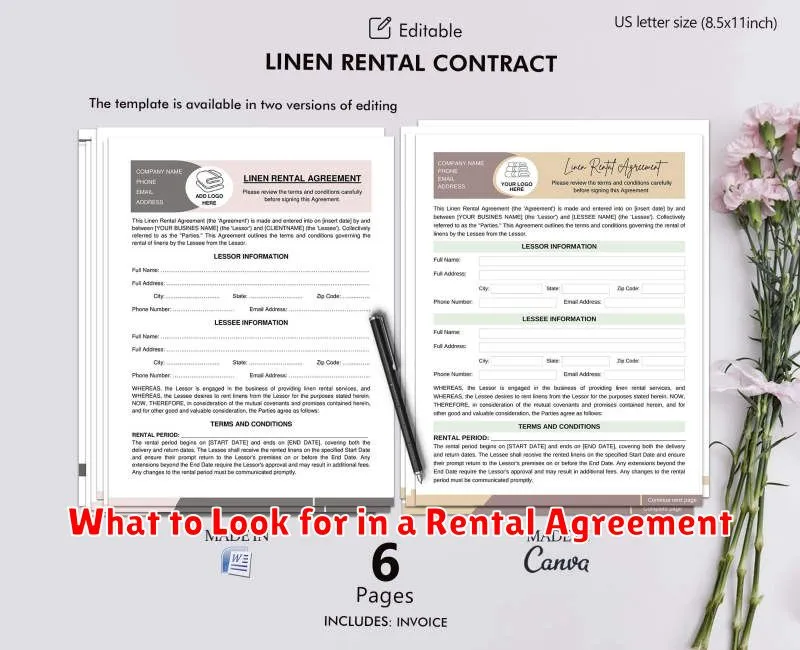
Entering into a rental agreement is a significant commitment, encompassing both rights and responsibilities for both landlord and tenant. Understanding the intricacies of a lease agreement before signing is paramount to avoid future disputes and ensure a positive renting experience. This article will guide you through the crucial elements to look for in a rental agreement, covering everything from the lease term and rent amount to maintenance responsibilities and termination clauses. A comprehensive understanding of these key components will empower you to confidently navigate the rental process and secure a suitable living arrangement.
Whether you are a first-time renter or a seasoned tenant, reviewing a rental agreement thoroughly is essential. From clearly defined lease terms and security deposit stipulations to outlining pet policies and parking regulations, a well-drafted agreement protects both parties involved. This article will provide a detailed checklist of important provisions to look for in your next lease agreement, helping you make an informed decision and embark on your tenancy with a clear understanding of your rights and obligations. We will delve into the specifics of what constitutes a legally sound and comprehensive rental agreement, ensuring you have the knowledge to secure a comfortable and legally protected tenancy.
Key Terms Every Tenant Should Know
Before signing a lease, familiarize yourself with these key terms:
Lease Term: The duration of the rental agreement. Rent: The monthly payment amount. Security Deposit: Money held to cover potential damages. Landlord: The property owner. Tenant: The renter.
Understanding these terms helps ensure a smooth tenancy.
Rent Due Dates and Late Fees
A rental agreement should clearly state the due date for rent. This is typically the first of the month, but can vary. Ensure you understand and agree with the specified date.
Late fees should also be explicitly defined. The agreement should detail when a payment is considered late and the amount of the fee. Some states have limits on how much a landlord can charge for late rent, so familiarize yourself with your local laws.
Look for grace periods. Some agreements offer a short period after the due date before late fees apply. Knowing this information can help you avoid unnecessary charges.
Security Deposit Policies
The security deposit is a crucial aspect of any rental agreement. Pay close attention to the amount, which is often limited by state law. The lease should clearly state the conditions under which the deposit can be withheld.
Documentation is key. Ensure the agreement specifies the process for documenting the condition of the property at move-in and move-out. This typically involves a written report and/or photographs. This documentation protects both the landlord and tenant.
Finally, the agreement should specify the timeline for returning the deposit after the lease ends, along with details regarding deductions for damages beyond normal wear and tear.
Maintenance Responsibilities
A crucial aspect of any rental agreement clarifies maintenance responsibilities. This section should explicitly state who is responsible for which repairs and upkeep tasks.
Landlord responsibilities often include structural repairs, plumbing issues, and heating system maintenance. Tenant responsibilities typically involve minor repairs, like changing light bulbs or unclogging drains. Be sure the agreement clearly outlines these duties to avoid future disputes.
Look for specific language regarding appliance repair and replacement. Who is responsible if the refrigerator breaks? The agreement should provide a clear answer.
Lease Duration and Renewal Clauses
The lease duration specifies the length of your tenancy, typically ranging from six months to a year. Carefully review the start and end dates.
Renewal clauses outline the process for extending the lease. Some leases automatically renew on a month-to-month basis, while others require a new agreement. Understand the terms for renewal, including any required notice periods and potential rent increases.
Termination Conditions
A crucial aspect of any rental agreement involves understanding the termination conditions. Both landlord and tenant rights regarding ending the tenancy should be clearly outlined. This includes the required notice period for both parties, typically 30 or 60 days.
The agreement should also specify the grounds for termination. This may include non-payment of rent, breach of contract terms, or damage to the property. Consequences for breaking the lease early should also be explicitly stated.
Understanding Legal Protections
A rental agreement, or lease, is a legally binding contract between a landlord and a tenant. It outlines the terms and conditions of the tenancy, including rent, duration, and responsibilities. Familiarizing yourself with your legal rights and responsibilities as a tenant is crucial.
Local and state laws govern landlord-tenant relationships. These laws cover various aspects, such as security deposits, eviction procedures, and required disclosures. Understanding these regulations helps ensure a fair and legally sound tenancy.
